Newton tévedett?
Jelentkezz be a hozzászóláshoz.
,,Boldogok, akik üldözést szenvednek az igazságért, mert övék a mennyek országa.\" //INRI
"THERE had never been a scientist like Newton, and there has not been one like him since. Not Einstein, not Archimedes, not Galileo, not Planck, not anybody else measured up to anywhere near his stature. Indeed, it is safe to say that there can never be a scientist like Newton again, for the scientists of future generations will have books and libraries, microfilms and microfiches, magnetic discs and other computerized information to draw on. Newton had nothing, nothing except Galileo's qualitative thoughts and Kepler's laws of planetary motion. With little more than that to go on, Newton formulated three laws that govern all motion in the universe: From the galaxies in the heavens to the electrons whirling round atomic nuclei, from the cat that always falls on its feet to the gyroscopes that watch over the flight of space ships. His laws of motion have withstood the test of time for three centuries. The very concepts of space, time and mass have crumbled under the impact of Einstein's theory of relativity; age-old prejudices of cause, effect and certainty were destroyed by quantum mechanics; but Newton's laws have corne through unscathed.
Yes, that is so. Contrary to widespread belief, Newton's laws of motion are not contradicted by Einstein's Theory of Special Relativity.
Newton never made the statement that force equals mass times acceleration. His Second Law says
F= d(mv)ldt
and Newton was far too cautious a man to take the m out of the bracket. When mass, in Einstein's interpretation, became a function of velocity, not an iota in Newton's laws needed to be changed. It is therefore incorrect to regard relativistic mechanics as refining or even contradicting Newton's laws:
Einstein's building is still anchored in the three Newtonian foundation stones, but the building is twisted to accommodate electromagnetic phenomena as well. True, Newton's law of gravitation turned out to be (very slightly) inaccurate; but this law, even though it led Newton to the discovery of the foundation stones, is not a foundation stone itself.
Newton's achievement in discovering the differential and integral calculus is, in comparison, a smaller achievement; even so, it was epochal. As we have seen, the ground was well prepared for its discovery by a sizable troop of pioneers. Leibniz discovered it independently of Newton some 10 years later, and Newton would not have been the giant he was if he had overlooked it. For Newton overlooked nothing. He found all the big things that were to be found in his time, and a host of lesser things (such as a way to calculate Pi) as well. How many more his ever-brooding mind discovered, we shall never know, for he had an almost obsessive aversion to publishing his works. The greatest scientific book ever published, his Principia, took definite shape in his mind in 1665, when he was 23; but he did not commit his theories to paper until 1672-74. Whether he wrote them down for his own satisfaction or for posterity, we do not know, but the manuscript (of Part I) lay in his drawer for ten more years, until his friend Edmond Halley 0656-1742) accidentally learned of its existence in 1684. Halley was one of the world's great astronomers; yet his greatest contribution to science was persuading Newton to publish the Principia, urging him to finish the second and third parts, seeing them through the press, and financing their publication. In 1687 this greatest of all scientific works carne off the press and heralded the birth of modern science." - Petr Beckmann (A History of Pi)
Intel.DZ77RE-75K.Core.i7-3770K.32GB.RAM.360GB.RAID.SDD.8TB.RAID.HDD.GTX660Ti.Dual.NEC.Windows.10.Enterprise Apple.Mac.mini.Core.i7-3615QM.16GB.RAM.1TB.HDD.OS.X.El.Capitan
HA A VILÁGEGYETEM TÁGUL, MI AZ AZ ERÕ AMI ARRA KÉSZTETI, HOGY TÁGULJON, ÉS HOVA TART, MI LESZ, HA TELJESEN SZÉTTÁGUL, MI AZ AZ ERÕ, AMI ERRE KÉSZTETI? PEDIG NINCS GRAVITÁCIÓ AZ ÛRBEN, MÉG IS HOGY MÛKÖDIK EZ AZ ETRÕ?
Ha erre nekem választ adsz, mert én soha nem fogok rá, mert emberi elmémmel nem tudom felfogni, hátha te megadod a választ?

\"A repülést hagyd a madarakra\":)) PS3 ID_USA: b4n4n0x_xVcL PS3 ID_EU:mrbananox007
Víz? Levegõ?
Kara kánként folytatom tanításom.
Ez egy Nobel-díjas megállapítás!
Már csak meg kell gyõzni errõl a svéd tudósokat.
Kara kánként folytatom tanításom.
Ha azt is vesszük, hogy a világegyetem tágul, már pedig tágul, milyen anyag töltheti ki az egyre üresedõ teret is...
Hát a Newtoni törvények, a világûrben nincs gravitáció, azokat max az univerzumok egymásra gyakorolt kölcsönhatásai, azon belül fekete lyukak, kvazárok, csillagok stb lehet valamennyire használni, de ott emberi ésszel felfoghatatlan erõk mûködnek, pl. egy fekete lyuk a mi napunknál ezerszer nagyobb csillagot is képes magába szippantani.....
\"Jobb a Linux... De akkor se kell!!! :P :DD\" Írtam egy ingyenes alkalmazást magyar nyelven: http://logout.hu/bejegyzes/deta/egy_hasznos_alkalmazas_tolem_nektek_sok_szeretette/hsz_1-50.html
Meg akkor a felfedezés öröme hova lenne? Meg amúgy is, ha megismernénk is, kéne egy olyan idõszaknak lennie, maikor még csak ismerjük.
De azért amit letettek anno, elgondolkodtatóak. Gondoljunk csak a környezetükre.
Örökzöld sláger lett a \"Hol a Start-menü?\", melyet a mai, informatikában dolgozó, az adófizetők pénzén kiképzett, magukat értelmiségnek nevező emberek költöttek. Ennyi konzervatív f@szt...
Einstein tévedett? Igen.
A jövõ nagy elméi tévedni fognak? Igen.
Az ember túl kevés ahhoz jelen formájában, hogy tökéletes elméleteket alkothasson, amit sohasem lehet megcáfolni vagy megkérdõjelezni.
Sõt valószínûleg a világ is elég absztrakt ahhoz,hogy akár még a definíciók is, még ha teljesen pontosak akár meg is változhatnak.
Szar játék az élet de qwa jó a grafikja!
,,Boldogok, akik üldözést szenvednek az igazságért, mert övék a mennyek országa.\" //INRI
,,Boldogok, akik üldözést szenvednek az igazságért, mert övék a mennyek országa.\" //INRI
Örökzöld sláger lett a \"Hol a Start-menü?\", melyet a mai, informatikában dolgozó, az adófizetők pénzén kiképzett, magukat értelmiségnek nevező emberek költöttek. Ennyi konzervatív f@szt...

Mindent tudni amúgy is csak a fanatikusok szoktak, nem a tudósok.

A történelem nagy tragédiája, hogy az Aurora helyett a Titanic süllyedt el. (Meg az, hogy a világot elárasztották a konteóhív?k...) i5-2400S 2.5GHz, HD7850 2GB, 8 GB RAM
-a vilagunkra nem a klasszikus newtoni hanem relativisztikus szabalyok ervenyesek
-ezeket figyelembe kell venni a csillagaszatban is
-ugy nez ki, hogy a gravitacio terjedesere is ervenyes a relativitaselmelet
(azaz a gravitacios ero terjedesenek is van sebessege, ami tulajdonkeppen egyfajta tertorzulas, tehat nem anyagkent vagy energiakent kell vele szamolni)
-sotet anyagot nem erdemes keresni, legfeljebb antianyagot, arrol meg tudjuk, hogy letezik, csak azt nem hogy mennyi es hol
Ahhoz hogy valaki a 21-ig század fizikáját vhogy megértse, az alapoktól kell kezdeni.

Nem a lényeg, hanem a fontos!
LZ forever
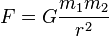 ) csökken, hanem erõsebb marad. Ebben az esetben nincs is szükség a sötét anyagra... Persze, ez megnt olyan, hogy nem igazolhatjuk az elkövetkezõ 1000000 évben sem...